
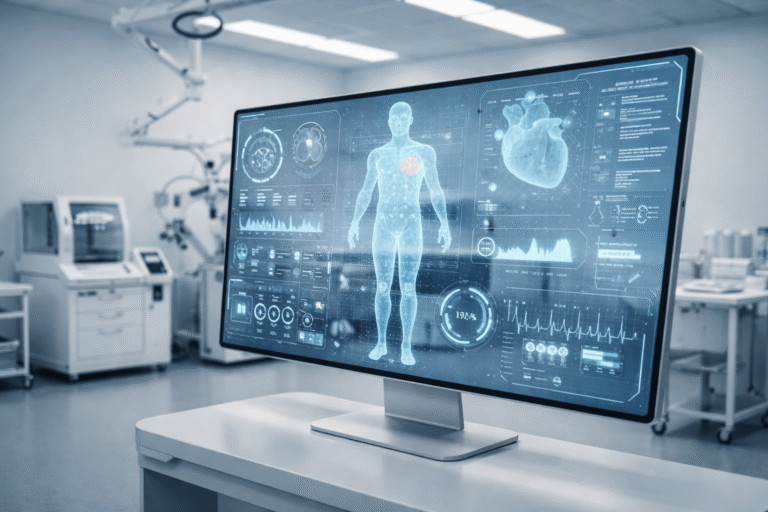

Artificial Intelligence (AI) has transformed the digital world, powering everything from voice assistants to recommendation engines. But what happens when AI steps out of the digital space and gets a physical body? This is where Physical AI comes into play—a revolutionary concept that combines intelligence with action, allowing machines not just to think, but to interact with the real world in tangible ways.
What is Physical AI?
Physical AI refers to artificial intelligence integrated into a physical form, such as robots, drones, or autonomous vehicles. Unlike traditional AI, which exists purely in software, Physical AI can perceive, move, and perform tasks in the real world. It’s the combination of cognitive intelligence (decision-making, learning, reasoning) and physical embodiment (movement, manipulation, sensory perception).
Imagine a warehouse robot that can not only navigate around obstacles but also pick up packages, sort them, and deliver them—all without human intervention. Or a healthcare robot that can assist nurses by carrying medical supplies, monitoring patients, and even helping with rehabilitation exercises. Physical AI makes all of this possible.
Key Components of Physical AI
Physical AI is more than just putting AI inside a robot. It involves several critical components:.
- Sensors and Perception
Sensors allow Physical AI to perceive its environment. Cameras, LIDAR, ultrasonic sensors, and touch sensors provide data about surroundings, obstacles, and human interaction. This sensory input is crucial for real-time decision-making. - Actuators and Mobility
Actuators are the muscles of robots, enabling movement. They help Physical AI perform actions like walking, grabbing, lifting, or even flying in the case of drones. - Cognitive Intelligence
Just like traditional AI, Physical AI requires machine learning and decision-making algorithms. These algorithms process sensory data, learn from experience, and make decisions in complex environments. - Human Interaction
Modern Physical AI systems are designed to interact safely and efficiently with humans. Through voice recognition, gesture understanding, and emotional sensing, these machines can cooperate with people in workplaces, homes, or public spaces.
Applications of Physical AI
The potential applications of Physical AI are vast and growing every year. Here are some key areas where this technology is making an impact:.
1. Healthcare
Physical AI is transforming healthcare. Robots with AI can assist surgeons in precision operations, deliver medications in hospitals, and support elderly patients with daily activities. They are reducing the burden on healthcare workers and improving patient outcomes.
2. Manufacturing and Warehousing
Factories and warehouses are increasingly using Physical AI for automation. AI-powered robots handle repetitive tasks, such as assembly, packaging, and inventory management, which increases efficiency and reduces errors.
3. Transportation
Autonomous vehicles are a form of Physical AI. Self-driving cars, delivery drones, and robotic taxis use AI to navigate roads, avoid obstacles, and transport goods or passengers safely. This technology is reshaping logistics and urban mobility.
4. Home Assistance
Robotic assistants like vacuum cleaners, lawn mowers, and personal helper robots are bringing AI into everyday life. They learn routines, adapt to changing environments, and help people save time on chores.
5. Entertainment and Education
Physical AI also entertains and educates. Robots in theme parks, museums, and classrooms interact with visitors, provide personalized experiences, and even teach children new skills in interactive ways.
Advantages of Physical AI
- Efficiency – Physical AI can perform repetitive and dangerous tasks without fatigue.
- Precision – Robots with AI can perform tasks with high accuracy.
- Safety – In hazardous environments like factories or disaster zones, Physical AI reduces human risk.
- 24/7 Operation – Unlike humans, AI-powered machines can work continuously.
- Adaptability – Machine learning allows Physical AI to improve performance over time.
Challenges in Physical AI
While the potential is enormous, Physical AI also faces challenges:.
- High Cost: Building AI-powered robots is expensive.
- Complex Programming: Robots must process vast amounts of data in real-time.
- Ethical Concerns: As machines become more autonomous, questions arise about responsibility, privacy, and safety.
- Human Acceptance: People may feel uneasy about machines performing tasks traditionally done by humans.
The Future of Physical AI
The future of Physical AI looks exciting. As AI becomes more advanced and robotics technology improves, machines will perform more complex and human-like tasks. We may see AI companions, fully autonomous factories, and smart cities where AI interacts seamlessly with humans.
Physical AI also opens possibilities for human augmentation. Exoskeletons powered by AI could help people with mobility issues, while AI-driven prosthetics could restore function and independence. In essence, Physical AI is not just creating smarter machines—it’s changing how humans interact with technology and the world around us.
Conclusion
Physical AI represents the next frontier in artificial intelligence. By giving AI a body, we are moving from virtual intelligence to actionable, real-world intelligence. It’s a technology that promises efficiency, safety, and innovation across multiple industries—from healthcare to transportation, and from homes to factories.
As this field evolves, Physical AI will increasingly blur the lines between humans and machines, creating a future where intelligent robots become an integral part of our daily lives.



Врач учитывает симптомы, риски, анамнез и семейную ситуацию, чтобы предложить подходящую программу.
Изучить вопрос подробнее – [url=https://n.narkologicheskaya-klinika-v-kemerovo18.ru/]https://n.narkologicheskaya-klinika-v-kemerovo18.ru/[/url]