
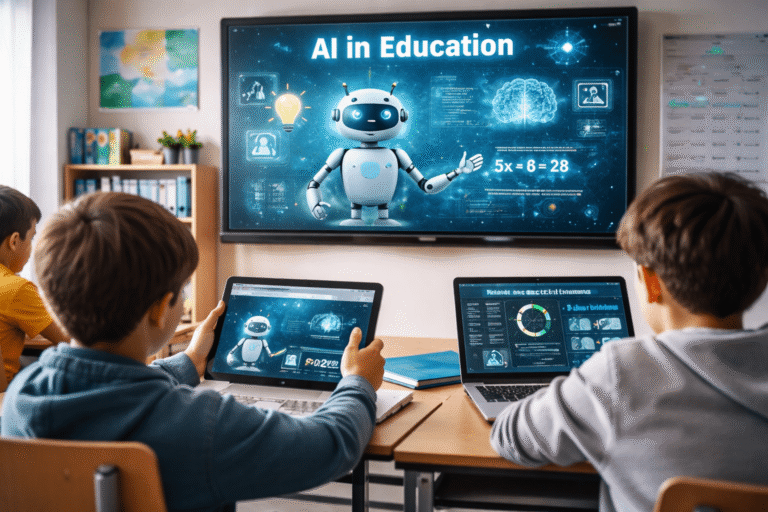

Introduction – Teh New Era of smart Learning
Education’s got more than just chalk and books now, and it’s not just one teacher lecturing a whole class AI’s shaking things up in classrooms and online learning today Schools and colleges are using AI to teach smarter, personalize lessons, support weak students, and reduce the workload on teachers.
From AI- powered smartboards in Dubai schools to automated test-grading software in the US, AI is making education faster, easier, and more effective — and this change is now spreading worldwide.
What Is AI in Education?
AI in education means using computer systems that learn, understand, and make decisions — just like a human tutor — to help improve learning.
Examples include:
Software that automatically explains math problems
Apps that recommend chapters students should study
Tools that grade homework without a teacher
Programs that teach languages using speech recognition
AI does not replace teachers — it strengthens them by helping them teach better.
Benefits of AI for Students
AI gives students advantages that were not possible before:.
✔ Personalized learning – Every student learns at their own pace
✔ 24/7 learning access – AI tutors are available anytime.
✔ Instant homework help – You don’t have to wait for a teacher
✔ Better focus – Apps monitor focus and suggest taking breaks
✔ Confidence boost – Students who are having a tough time find private tutoring helpful
✔ Fun learning – Quizzes, games, and interactive videos really spice up studying
One of the biggest benefits is quiet/shy students who never ask questions in class — AI allows them to learn and ask privately without fear.
How AI Helps Teachers and Schools
Teachers are the real MVPs, btu they’re usually stretched super thin AI removes repetitive work so teachers have more time to focus on students.
AI can:
Check assignments automatically
Create lesson plans automatically
Identify weak students early
Track attendance & behavior digitally
Send notifications to parents automatically
This makes schools organized, modern, and efficient.
AI Tools Used in Modern Classrooms
Some common AI tools used in education include:.
Tool Type Example
AI Smartboards Interactive digital boards
Virtual Tutors Apps like Duolingo, Khan Academy AI.
Homework Graders Google Classroom auto-grading
Learning Analytics Tracks progress & suggests improvement
Speech-to-Text Tools Helps special-needs students write easily
These tools help students of all ages, from kindergarten to university
Personalized Learning – Tailored for Each Student.
Traditional classrooms assume all students learn the same way, but that’s not how real learning happens Some students pick up things quick, while others take their sweet time
AI changes this by:
Studying how each student answers questions
Measuring time spent on topics
Analyzing mistakes and strengths
Creating custom lesson plans
So a slow learner gets step-by-step lessons… A quick learner gets ahead with advanced lessons, and no student is left behind
AI Homework Helpers, Study Apps & Virtual Tutors.
AI apps are becoming digital tutors — like a teacher that lives in your phone.
Examples:
Math apps that explain steps of a problem.
Language apps that correct pronunciation
Chatbots that answer science questions
Platforms that summarize chapters for revision
These tools let students hit the books whenever they want, no matter if it’s late at night at home and no teacher around
AI also helps students prepare for exams by:.
Creating practice tests
Showing likely exam questions
Tracking mistakes and progress
Sending reminders for weak topics
AI for Exams, Tests & Performance Tracking.
Schools can use AI to monitor students’ academic performance throughout the year.
AI systems can:
Track attendance
Analyze test scores
Identify students who need extra help
Create automatic progress reports
Parents get better info on their kid’s schooling
Many schools also use AI- Using plagiarism detectors to keep our assignments legit and stop cheating
Challenges of AI in Schools
Although AI is powerful, there are some issues:.
⚠ Not all schools can afford technology
⚠ Internet access may be limited in villages.
⚠ Teachers need training to use AI tools.
⚠ Students may become too dependent on technology.
⚠ Privacy rules must protect student data
Governments must build strong digital policies so AI benefits education fairly.
Future of Education With AI
In the next 10 years, we may see:.
🤖 Fully smart AI classrooms
Students dive into virtual worlds, like stepping back in time to ancient history or exploring teh cosmos, using VR/AR for learning
🧠 AI tutors that understand emotion & stress.
Worldwide online classrooms where students from various countries learn together
📚 AI textbooks that update automatically
This means education will become:
More personalized
More affordable
More engaging for every student
AI will help every child learn at their own pace, creating smarter future generations.
Conclusion
AI is transforming education into something smarter and more flexible.
From virtual tutors to automatic grading, AI reduces pressure and increases learning quality.
Students pick up knowledge quicker… teachers cut down on prep time… schools boost their scores
AI in education is not only about technology — it is about giving every child a fair chance to succeed.


Just joined and I am already hooked on the amazing game selection and the genuinely warm community vibe. The app works perfectly on my phone and withdrawals are processed in record time. This club truly knows how to keep its members happy and secure while making every session enjoyable.
I enjoy how this site blends fast action with a calm and respectful environment for every player. The customer service team speaks our language and solves issues within minutes. It is my go to destination whenever I want a fun and fair gaming break. thhotbet