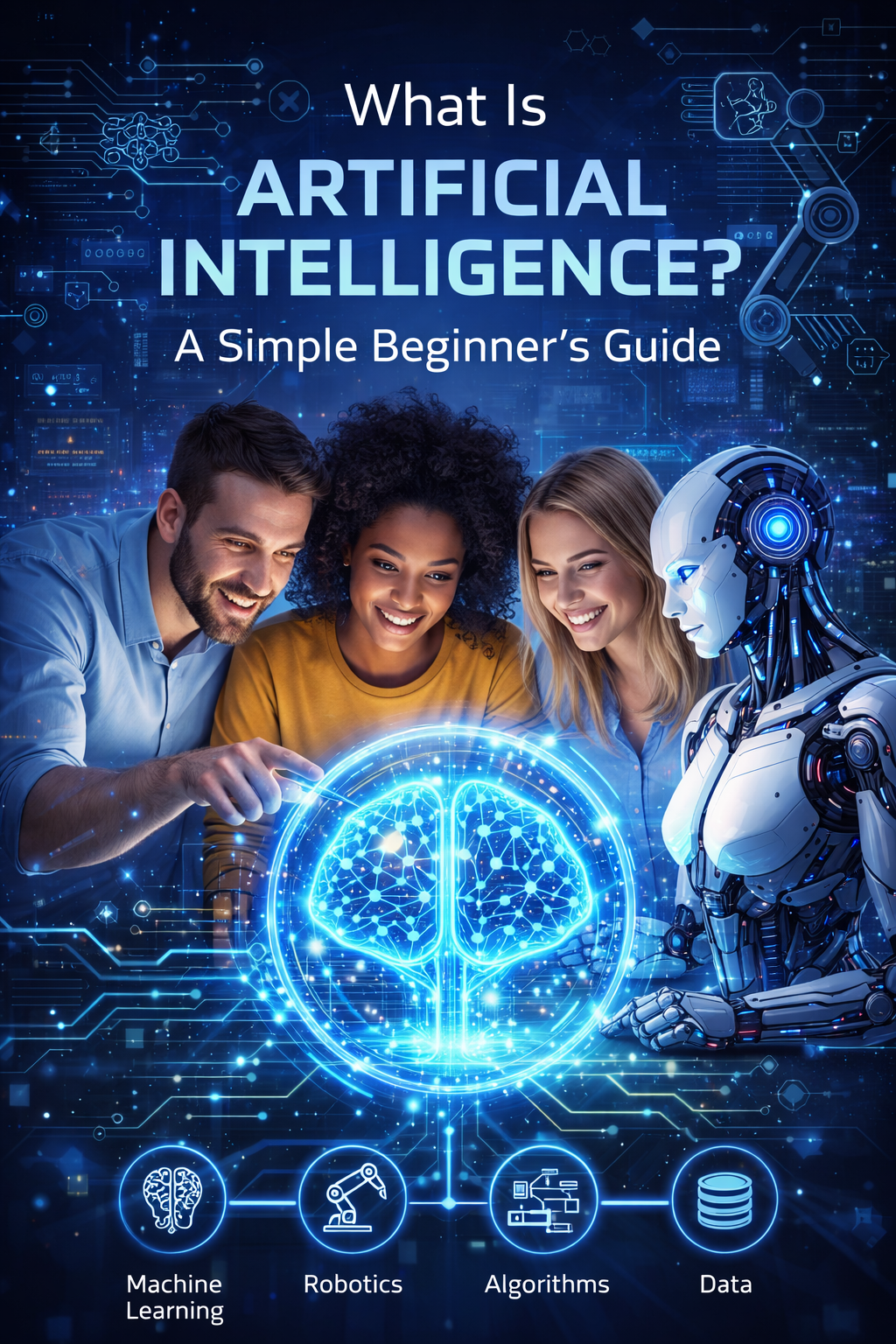
AI, or artificial intelligence, is a term that’s popping up everywhere these days Folks chat about it on social media, in the news, at school, and even in everyday chit-chats But many beginners still feel confused about what artificial intelligence really is and how it affects everyday life. In simple words, AI is a technology that helps machines think, learn, and make decisions in a smart way, just like humans do.
You don’t need to be a tech expert to understand AI. In fact, most people already use artificial intelligence daily without even realizing it. This article explains artificial intelligence in a very simple, human-friendly way so anyone can understand it easily.
What Does Artificial Intelligence Mean?

Artificial intelligence means creating computer systems that can perform tasks that normally require human intelligence. These tasks include learning, problem-solving, understanding language, recognizing images, and making decisions. Instead of just following fixed instructions, AI systems can improve themselves by learning from experience.
For example, when Netflix suggests movies you might like or when your phone predicts the next word while typing, that is artificial intelligence working in the background. AI does not think like humans emotionally, but it can analyze information much faster and more accurately in many cases.
How Artificial Intelligence Works in Real Life

Artificial intelligence operates by crunching data The more data an AI system gets, the smarter it becomes. AI systems study patterns in data and use those patterns to make decisions. This whole learning thing is known as machine learning
Machine learning lets computers pick up new skills without us having to teach them the same thing over and over Like, email spam filters figure out which messages are spam by watching what users do wih them If a bunch of people tag emails like this as junk, the system gets smart and stops ’em
Deep learning’s a key aspect of AI Deep learning takes a cue from our own noggin, using these things called neural networks These networks assist machines in identifying faces, comprehending speech, translating languages, and even piloting cars Voice assistants like Google Assistant and Siri are popular examples of deep learning in action.
Types of Artificial Intelligence Explained Simply
There ar various kinds of AI, each with its own level of sophistication
Narrow AI is the most common type. It’s built to nail one particular job like a champ Examples include chatbots, recommendation systems, face recognition, and virtual assistants. Narrow AI cannot think outside its programmed purpose.
General AI is a future idea where machines will be able to think and learn like humans across many tasks. This type of AI does not exist yet, but scientists are researching it.
Super AI is a theoretical concept where machines become smarter than humans. Tihs concept gets a lot of play in films and sci-fi, but it’s not something we’re dealing with in real life right now
Everyday Examples of Artificial Intelligence
AI’s already a part of our everyday life Smartphones use AI to improve camera quality, unlock phones using face recognition, and provide voice typing. Social media platforms use AI to show posts and videos that match your interests.
Online shopping websites use AI to suggest products based on your browsing history. In healthcare, AI helps doctors detect diseases earlier by analyzing medical reports and images. In education, AI tools help students learn faster through personalized lessons.
Even banks use artificial intelligence to detect fraud and provide customer support through chatbots. These examples show how deeply AI is connected to modern life.
Benefits of Artificial Intelligence
One of the biggest advantages of artificial intelligence is saving time. AI can perform repetitive tasks quickly, allowing humans to focus on creative and important work. It also boosts accuracy, particularly in areas like healthcare, finance, and research
AI systems can work 24/7 without getting tired. These are super handy for customer support and keeping an eye on things Artificial intelligence also helps businesses make better decisions by analyzing large amounts of data.
Another perk is customization AI helps provide personalized experiences, such as customized content, learning plans, and product recommendations.
Challenges and Concerns About AI
Artificial intelligence is super cool with all its perks, but it’s not all smooth sailing A big worry is that robots might take over our jobs Some jobs may disappear due to automation, but at the same time, new jobs related to AI and technology are being created.
Privacy’s another big issue we gotta think about AI systems collect and analyze personal data, which raises questions about data safety and misuse. Bias in AI systems is also a problem, especially if the data used for training is unfair or incomplete.
Because of these issues, it is important to use artificial intelligence responsibly and ethically.
The Future of Artificial Intelligence

The future of artificial intelligence looks exciting and full of opportunities. AI’s gonna get even smarter and more useful in stuff like smart homes, self-driving cars, education, and healthcare Instead of replacing humans, AI is meant to assist and support human abilities.
As technology improves, understanding AI will become more important for everyone, not just engineers. Grasping the fundamentals today can set people up for tomorrow’s shifts
Final Thoughts
AI’s not just a thing for tomorrow anymore It’s already changing teh way we live, work, and talk to each other By understanding what AI is and how it works, beginners can feel more confident using modern technology.
Whether you’re a student, blogger, or running a business, AI’s gonna be a big part of your daily grind Getting to grips wih it now is a savvy move for keeping up with the digital scene